Most of us have likely heard the tale of the Good Samaritan, even if we aren’t familiar with its origins. It comes from a story in the New Testament, in which a man offers to help a fellow traveler who has been beaten and left for dead on the side of the road. As a parable, it exemplifies the ethical value of providing aid to strangers with no expectation of compensation.
If the particular Samaritan in this story was deemed to have been good, it suggests there must have been bad, or just so-so Samaritans as well. On a recent weekend, I had back to back encounters with both extremes, giving me pause to reflect on my fellow man.
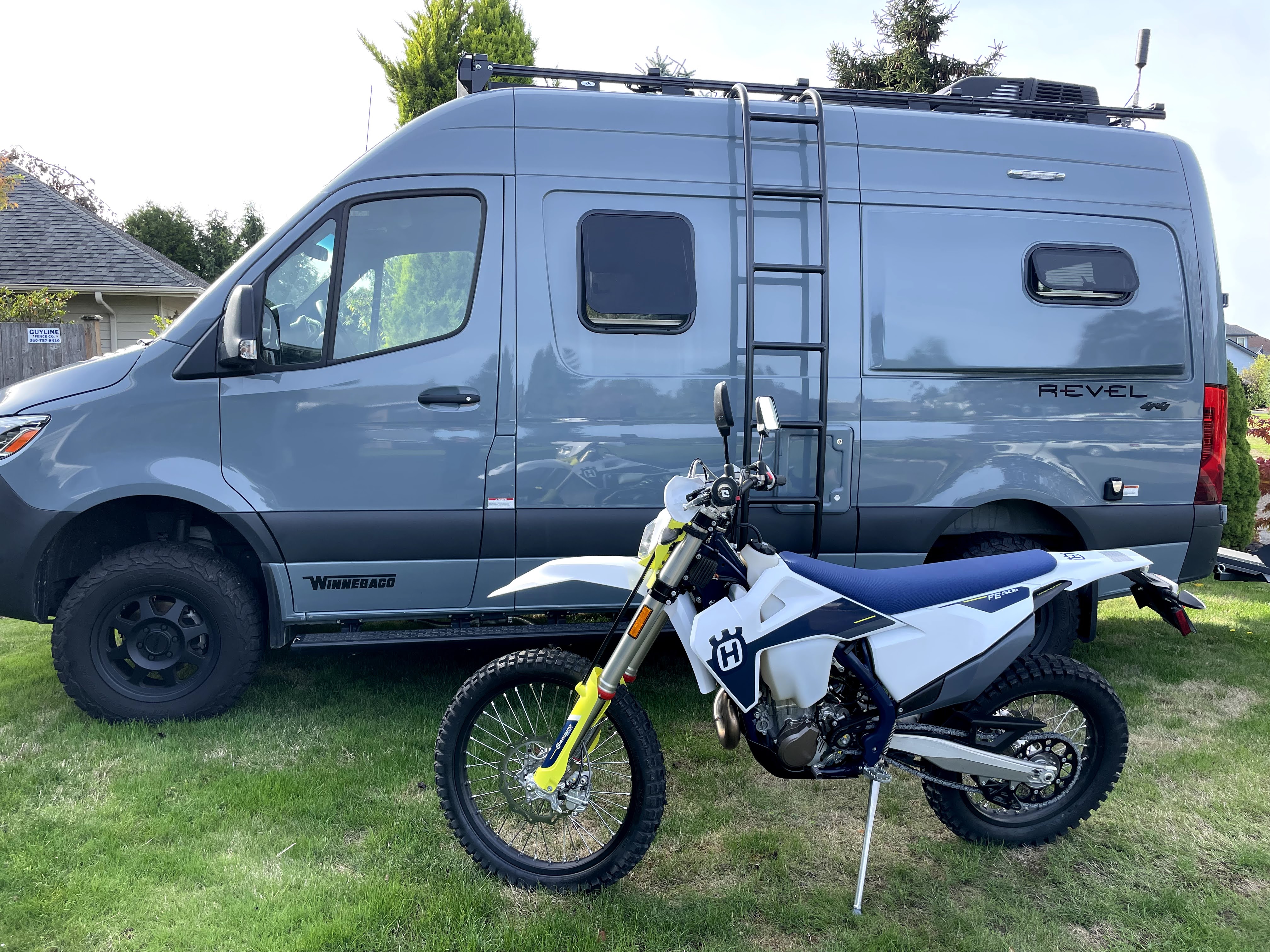
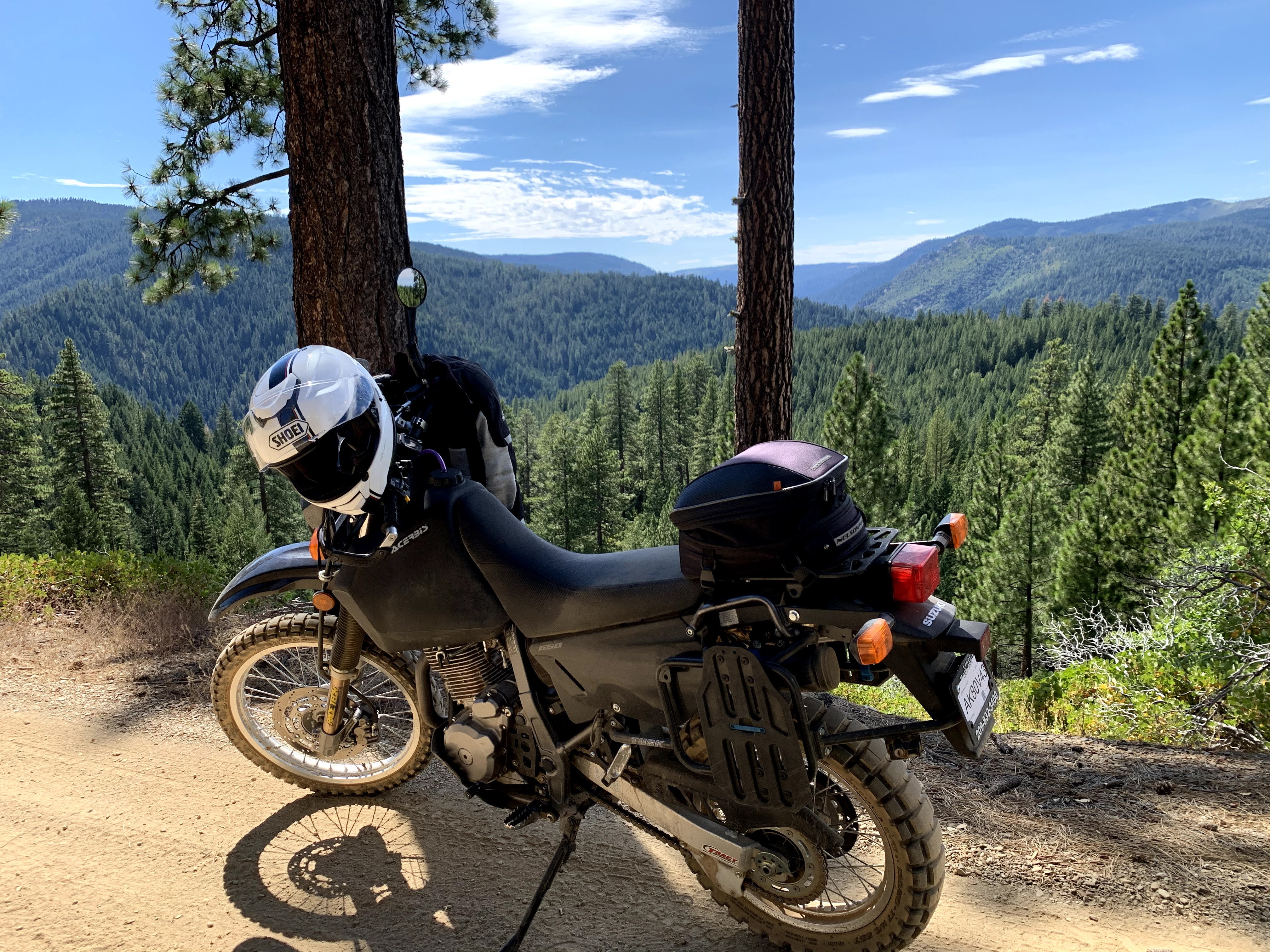
On Saturday, I was out for a maiden voyage on my brand new Husqvarna dual sport motorcycle, and true to form, I ran out of gas about 2 miles from the nearest station. I was in luck that most of the way was downhill, but with about a half mile to go, the slope turned severely upward, leaving me with some considerable work to push the bike the rest of the way. As I labored alongside the road, I noticed an old, beaten up pick up coming in my direction. The driver was crossing to my side of the road, and he pulled into a turnout directly in my path. It took me another minute or two to reach him, and by the time I did, he had gotten out and was retrieving a gasoline can from the back.
“Looks like you could use some help,” he said. “That’s quite a hill you have to climb.”
It was pretty clear that this gentleman was of humble means and that he had just purchased the gas he was offering to me.
“I really can’t,” I protested, “but that’s very kind of you.”
“No trouble at all,” he replied, brushing aside my objection and handing me the can.
We exchanged a few pleasantries, and he refused to accept my offer to pay him for the fuel. Instead he held out his hand to me, introduced himself as Steve, and went along his way.
Needless to say, I was very moved by this selfless act of kindness, and the famous Biblical tale sprang to mind.
The next day, still feeling the good vibe from this encounter, I was riding my bicycle through a farming area where the roads feature very narrow shoulders. In my experience with such roads, the vast majority of drivers will make a pointed effort to steer a wide path around me, often waiting for oncoming traffic to pass in order to do so safely.
On this day, three vehicles were passing me while I squeezed as tightly as I could into the narrow shoulder. The first two followed the typical path, providing a wide and safe margin. The third, an oversized and obnoxiously noisy truck, proceeded to buzz me with about 6 inches to spare between his mirror and my head. I was startled to say the least, and I gave an involuntary yell, holding out my hand with palm facing upward in the universal gesture of “what the fuck?”
To this, the driver rolled down his window and flipped me off, presumably to add a flourishing touch to his reckless and senseless act.
After the ride and having recovered from the shock of this depressing event, I couldn’t help but reflect on these two encounters, so close in juxtaposition as they were. Here were two people choosing diametrically opposed ways to engage with a total stranger. Steve performed his act of kindness in spite of our anonymity; the truck driver committed his violent act because of it.
It was a reminder that in a world inhabited by people of free will, there will always be creeps like the truck driver, but what holds us together is that they are greatly outnumbered by the Good Samaritans. That has been my observation, in direct contrast to what the news and social media would have us believe.
So let me say one more time to Steve from Alger, Washington, should you ever happen upon these words: Thank you for the help, my friend.
Husqvarna FE 501S Dual SportSix wheels of funHow to bring along the toy
Anyone following my little journal might be surprised by now at the omission of any mention of a bucket list, that obligatory catalogue of desirous achievements so common among those my age. This practice has always struck me as somewhat ‘pro forma’, like a to-do list that entails methodically checking off items and often posting them to social media in order to publicly affirm that our lives are as fulfilling as they ought to be.
I think of life rather as a bucket of experiences, amazing ones (hopefully), but also mundane and even disappointing ones, for this seems a more realistic expectation of fully engaging in the world around us. Last week, I was reminded of this distinction while attending a company meeting in Geneva, Switzerland, our first get together after 18 months of COVID lockdown. The meeting itself was a blast. We worked hard on our commercial strategy, and I delighted in sharing my experiences as a ‘grizzled veteran’ with my younger co-workers. It didn’t hurt that our evenings were occupied with loud, laughter-filled dinners, facilitated by surprisingly tasty local Swiss wines. (Side note: Lake Geneva is enveloped by vineyards; grapes were cultivated there by the Romans, making it a World Heritage Site.)
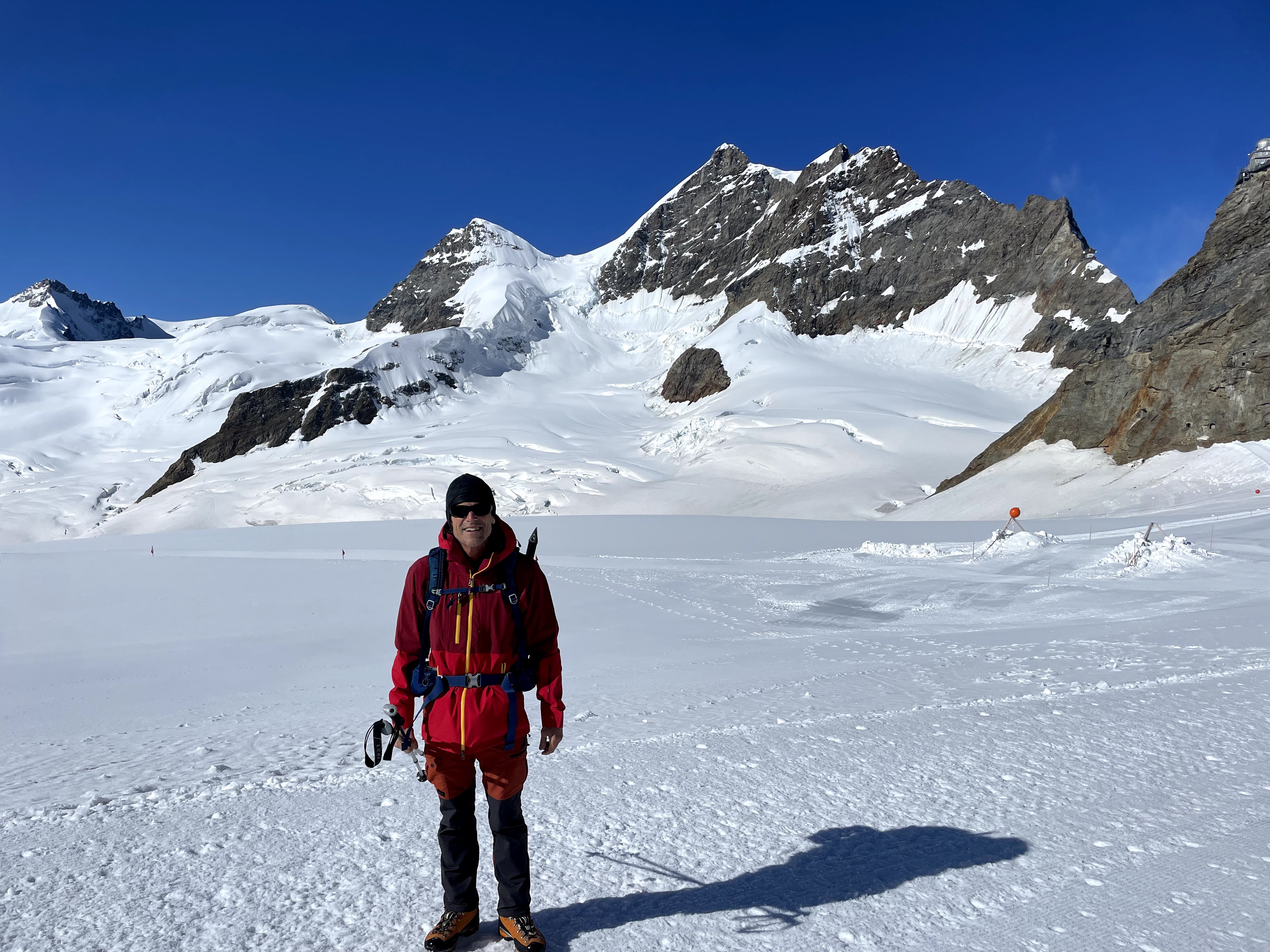
But my real excitement was in anticipation of the weekend, for a colleague had invited me to climb one of the famous mountains in the Alps, the Jungfrau (German for maiden or young lady). I’ve never climbed a mountain, but I am an avowed adventurer, so of course I immediately said yes to his kind invitation. And later, I only gave the slightest pause when he sent me a Youtube video which conveyed the seriousness of the endeavor.
On Friday, our group assembled. It consisted of my work friend, his long time climbing buddy from South Africa, my friend’s son and his son’s friend, two strapping young lads with loads of mountaineering experience. In fact, everyone in the group has climbed extensively, and they were extraordinarily gracious to include me, a “climbing Jungfrau”. 🙂
The Jungfrau is the highest of a trio of peaks in the Bernese Alps that, along with the Eiger and Monch, forms one of the world’s most famous mountain climbing trilogies. As with most Alpine assents, you spend the preceding night acclimatizing in a high altitude “hut” and setting out the next morning before dawn. On Saturday afternoon, my friend and I took advantage of our early arrival and perfect weather to take a practice climb up the back side of the Eiger (of North Face fame). We ascended to a ridge, which at 3750 meters elevation sits only 200 meters below the peak. This was my first opportunity to see if I had the right stuff for this adventure: Did I have the physical endurance to trod uphill through ice and snow for hours at a time? Could I master fundamental skills, like maintaining my balance by sinking an ice axe into the opposite side of a 70 degree sloped ridge? Could I keep my wits about me, knowing that one misstep might lead to tragic results? After this “warm up”, I was elated to be able to answer these questions in the affirmative, and my weekend would have been a thrilling success if it had ended right there.
The goal, however, was to climb to the summit of the Jungfrau on Sunday, which began to look questionable as we watched a heavy snow fall develop while having dinner. The psychology of climbers is fascinating. When they talk about attaining a mountain peak, they describe it as an attempt. This isn’t hedging their bets; it’s an acknowledgment that many things can go wrong, and a single one will very likely result in an aborted effort. It’s also a reminder to celebrate the journey no matter the outcome, to be humble and respectful in the face of nature’s magnificent power.
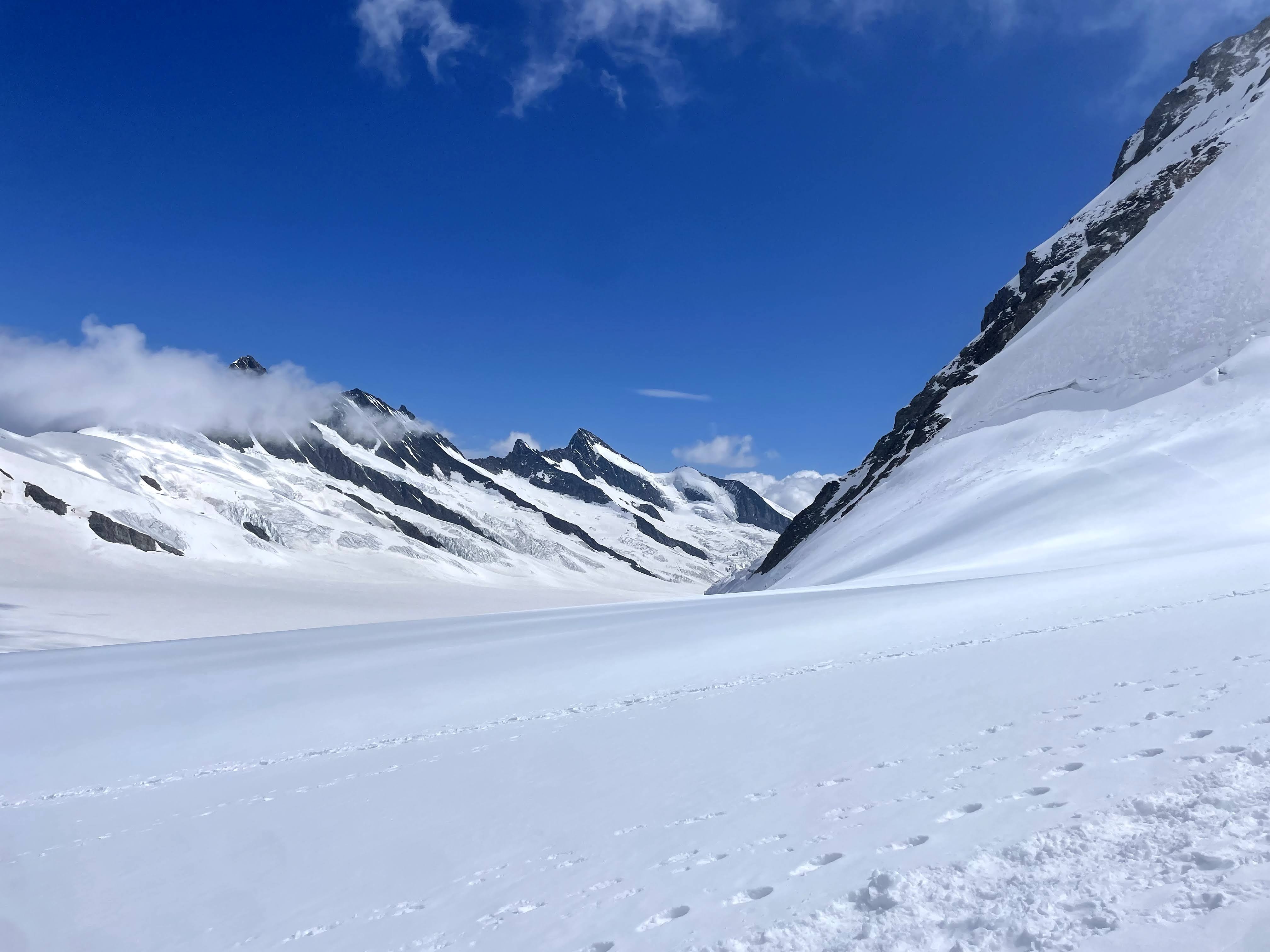
Setting out on Sunday at 4:30 am, it was obvious the weather had taken a turn for the worse. Several inches of snow had fallen overnight, and a chilling wind greeted the day. Mountains, however, are infamous for fast-changing weather conditions (both good and bad), so keeping an optimistic eye on reports, we headed out across the glacier that leads to the base of the Jungfrau.
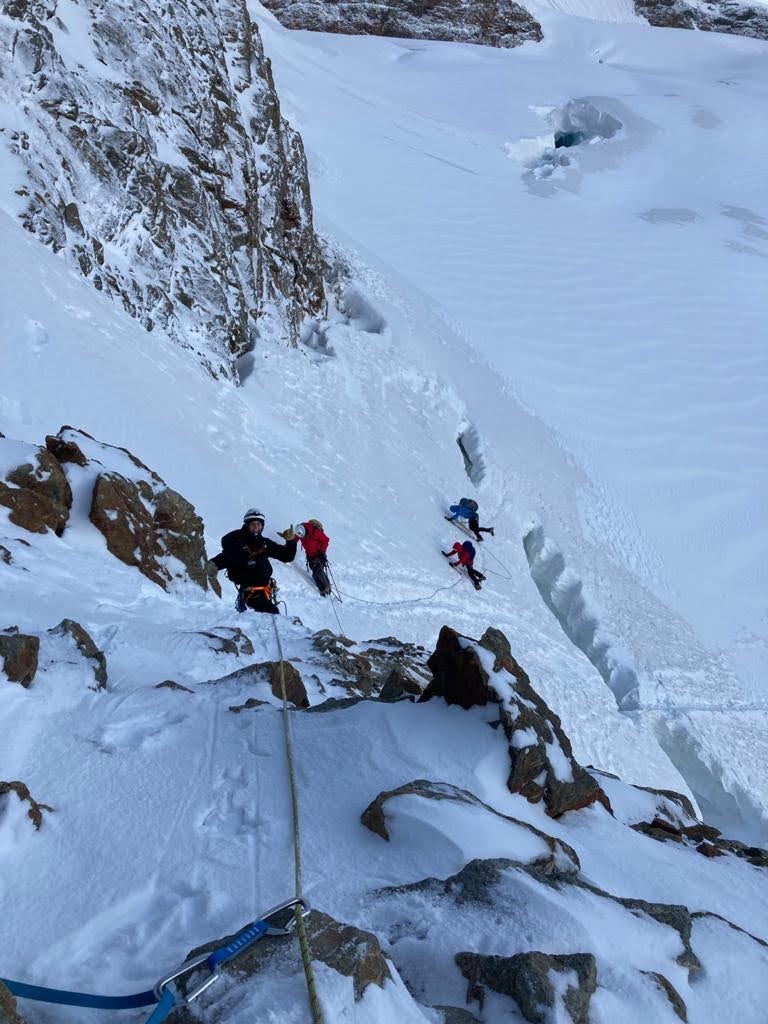
Before this trip, I’m sure I had heard of the phenomenon of glacial crevasses, but I never fully understood or appreciated exactly what they were. In fact, they are just as they sound – vacant spaces in the ice, potentially dozens of feet deep – avoidable if visible but often covered by snow, making them one of the most treacherous aspects of mountain climbing. Sometimes, going around a crevasse is not as simple as it sounds, as I learned on Sunday. Approaching a particularly daunting gap in the ice, we noted the presence of a snow bridge that looked like it had been crossed on previous days but that we did not trust to support our body weight. This necessitated a traversal using the ice axe and crampons in a ‘crab walk’ maneuver across an extremely steep ice wall around and then above the crevasse. Slipping would have meant relying on the other climbers to catch you via the rope we were all attached to. Thankfully, this safety device went unemployed, but my heart rate monitoring watch must have been curious what I was up to.
Reaching the Jungfrau base proper, we encountered a rocky ridge that requires actual climbing. The first section was manageable, and I was happy to get through it. It was only when we reached the second section that I became acutely aware of how difficult this was going to be. The rock wall in front of us would be challenging under normal conditions, but on this day it was covered with ice, meaning grip could only be attained through the crampons on our boots (look ma, no hands!). One member of the team ascended about 15 meters to a level area (respect!); he then belayed each of us in turn to join him. While the others could all have climbed without the rope, there was no way I could have done that. For them the rope was for safety; for me it was a climbing aid.
In climbing, you are continually making a decision: go forward or turn back. It’s a gut wrenching choice. You might spend months or even years waiting and preparing for this day. How can you come this far only to be denied achieving your dream? But perhaps it’s now clear why climbers define the goal as the attempt, not the summit. Reaching the summit requires many things to be sure: skill, training, desire, courage. But it also requires a measure of luck, notoriously fickle luck.
Standing on that ledge with the weather worsening and assessing our slow progress, we agonized over the decision to go forward or turn around, but all of us knew there was only one real option. Once it was said out loud (by one of the two young men: “let’s live to climb another day”), the spell was broken, and we began our long descent back to camp.
On the train back to Zurich, I had plenty of time to reflect on the previous two, magnificent days. If climbing to a summit in the Alps had been on a bucket list, the weekend would have been in some sense a failure. It was just the opposite. In two days, I learned so much about myself; that I am still up to extreme physical challenges, that I can manage my emotions and perform under risky circumstances. I made great new friends and shared a treasured experience with them. I got to see the exquisite beauty of Switzerland.
And I learned the incredibly important lesson that the wisdom to turn back is just as important as the courage to go forward.
The gorgeous Swiss countryside carved out by glaciers
Have you ever visited a new place and been struck by an immediate, distinct feeling that you know it even though you’ve never been there? That happens to me a lot, and the phenomenon is one of the reasons I love to travel. I often wonder how much of it is the place speaking to me vs. me projecting my own experiences on it. At the same time, I’ve also learned that feelings, like looks, can be deceiving, sometimes exceedingly so as exemplified by my experience this past weekend.
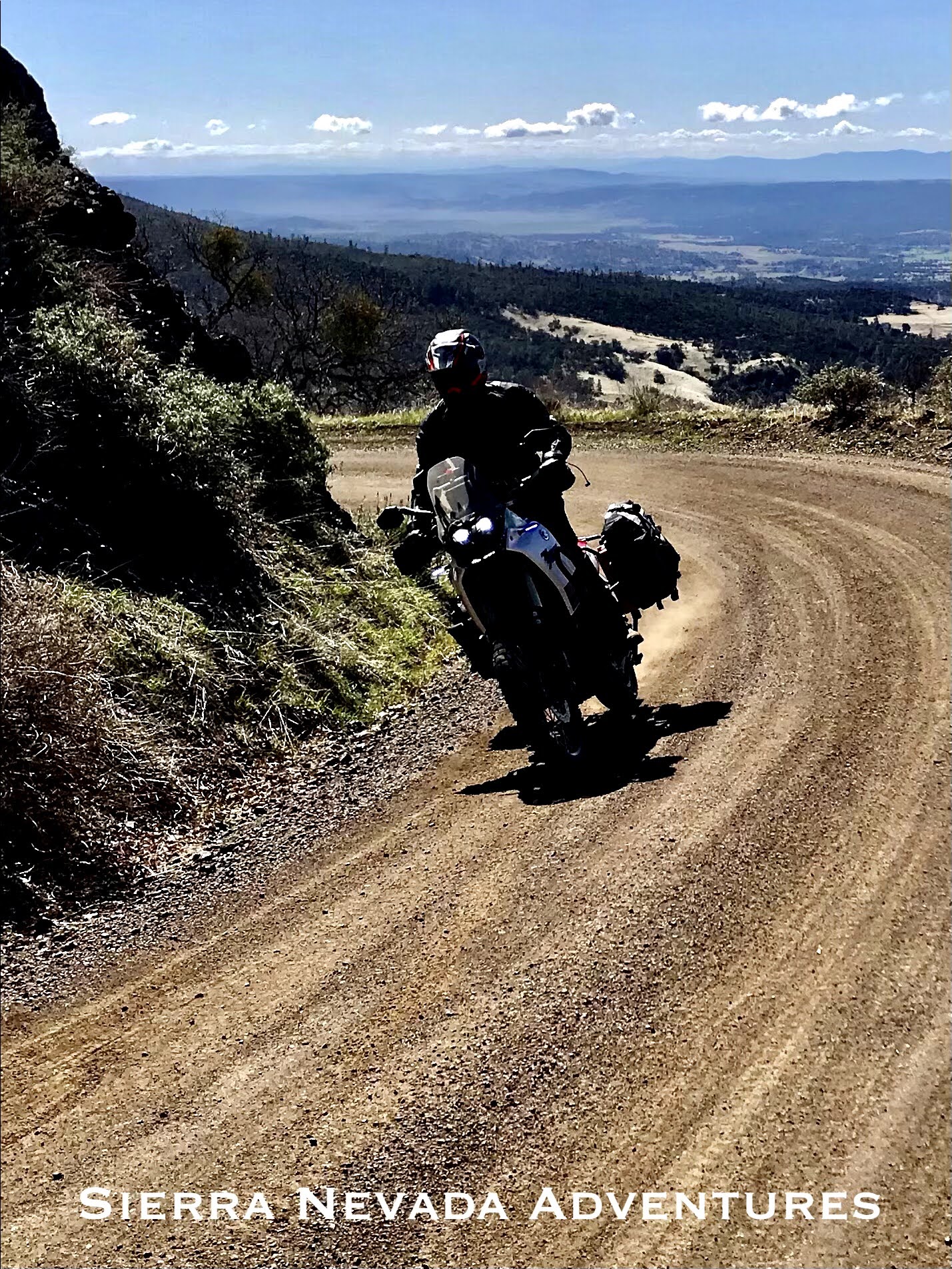
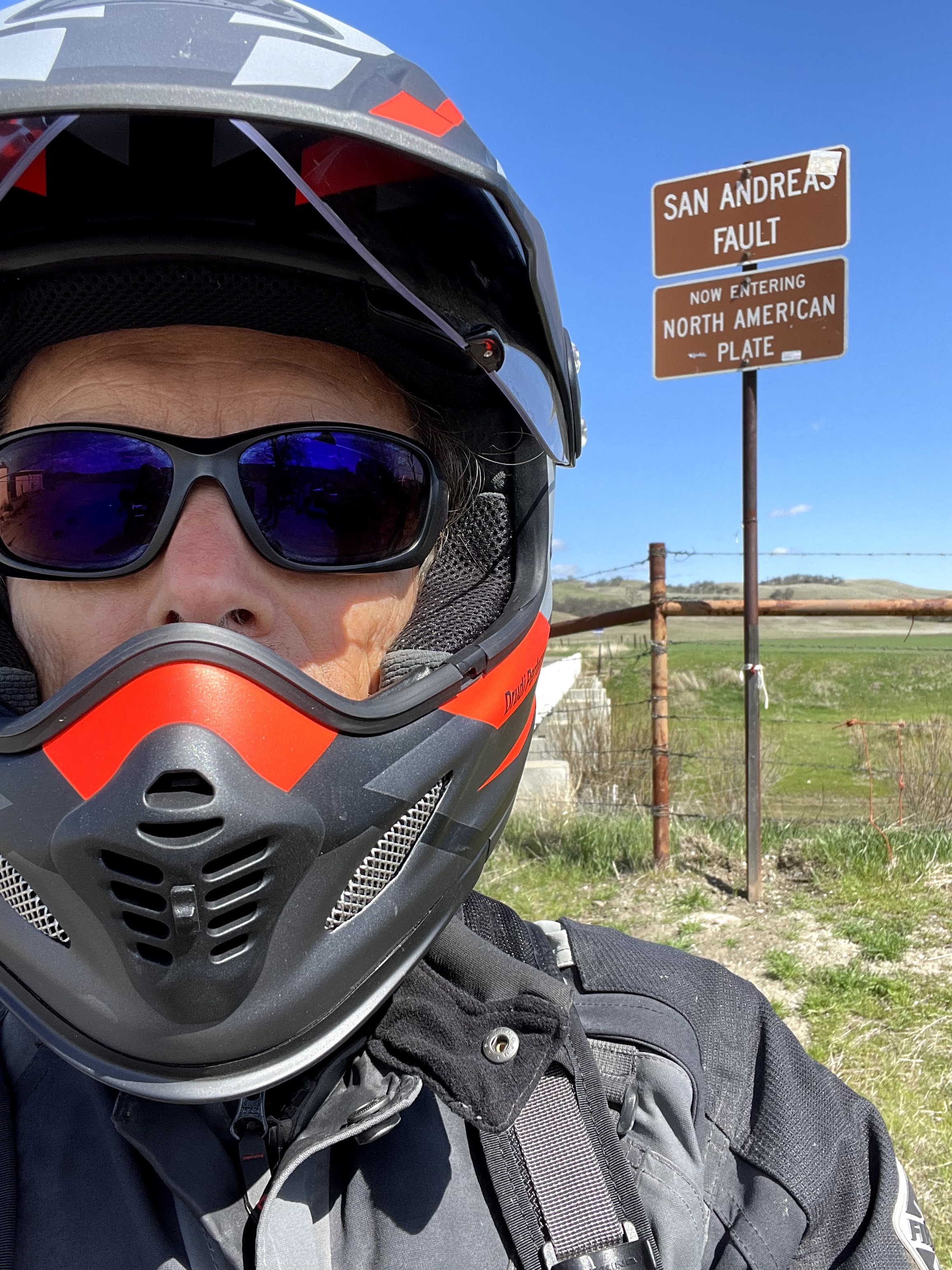
On Saturday morning, our Sierra Nevada Adventures riding group met in the farming town of Hollister, California and made a winding journey south along the Carrizo Plain, a vast grassland traversed by the San Andreas Fault. After a full day of spirited riding through gorgeous countryside, we stopped for the night in the town of Taft, Taft is an oil town formed at the turn of the 20th century when massive petroleum deposits were discovered in the southernmost part of the San Joaquin Valley. It’s the kind of place where people graduate high school and work their entire lives for the local, dominant employer, in this case Standard Oil. The houses are modest, and many look long overdue for some maintenance. The streets are gaudily wide, probably to accommodate Independence Day parades gone by. One suspects its glory years are behind it, but even so, the town’s history speaks out through its public parks and buildings, a superbly architected high school built during the heyday, and a proud little museum recalling past glories.
As I am wont to do in new places, I got up very early Sunday morning, walked the empty streets, and watched as the town stretched its limbs and slowly came to life. I happened upon a restaurant, which had its Closed sign out, but I observed three elderly gentlemen inside setting the tables. As the door wasn’t locked, I stepped inside and inquired when they would be open. The men informed me that they were customers, not employees, and they liked to show up early to give the waitress a head start on the day. Yep, this is a small town alright.
Inviting me to sit down, they poured me a cup of hot coffee (still no waitress!) and welcomed me to their regular Sunday morning meet up. As more friends arrived, I could see that even at 60, I markedly lowered the average age in the place. In the course of their conversation, I learned that nearly all of these folks had grown up in the town, worked in the oil fields, and retired to a quiet life in the only home they’ve ever known. Aside from their extreme friendliness – they all addressed me by my first name – I was struck by the amount of laughter in the room. Every utterance, no matter how unremarkable, invoked immense chortling and guffawing. I was either not in on the joke, or more likely they were simply inclined toward merriment. They were also enormously kind to each other and very well informed about details of their companions’ lives. When one of the men was conspicuously late, it was roundly agreed that his cat had not awakened him. Sure enough, when he finally showed up, he informed the group that the cat had not yet adjusted to Daylight Savings Time. Ok, that is humorous.
While enjoying a ridiculously large breakfast and about a gallon of coffee, I looked up the town’s history, and I was thunderstruck by a fact for which I was totally unprepared. In its early years, Taft was what was known as a “sundown town” which, according to Wikipedia were “all-white municipalities or neighborhoods in the United States that practice a form of racial segregation by excluding non-whites via some combination of discriminatory local laws, intimidation, and/or violence”. The term comes from the posted signs that informed “colored people” that they must leave by sundown. I was stunned as I had no idea such places existed in California.
Given the ages of these citizens, they surely lived during that period, and I struggled mightily to assimilate this new information with my earlier observations. Were I a bit more intrepid, I would have found a way to raise the subject and hopefully hear their remembrances and perspectives about this stain on their town’s history. It would have been especially relevant in today’s troubled times. But I’m a motorcycle traveler, not an investigative journalist, so I was left to wonder how this had played out in the town and in their own lives. And I was reminded once again how first impressions only tell a small part of the story.
Wrapping up breakfast, I received enthusiastic well wishes on my travels and resumed my ride. Heading out of town, I passed hundreds of oil drills, most no longer active. These relics stand as stark sentinels of the past, a reminder that times are always changing. We can only hope for the better.
Small towns are about the only place you can still find a Sears store
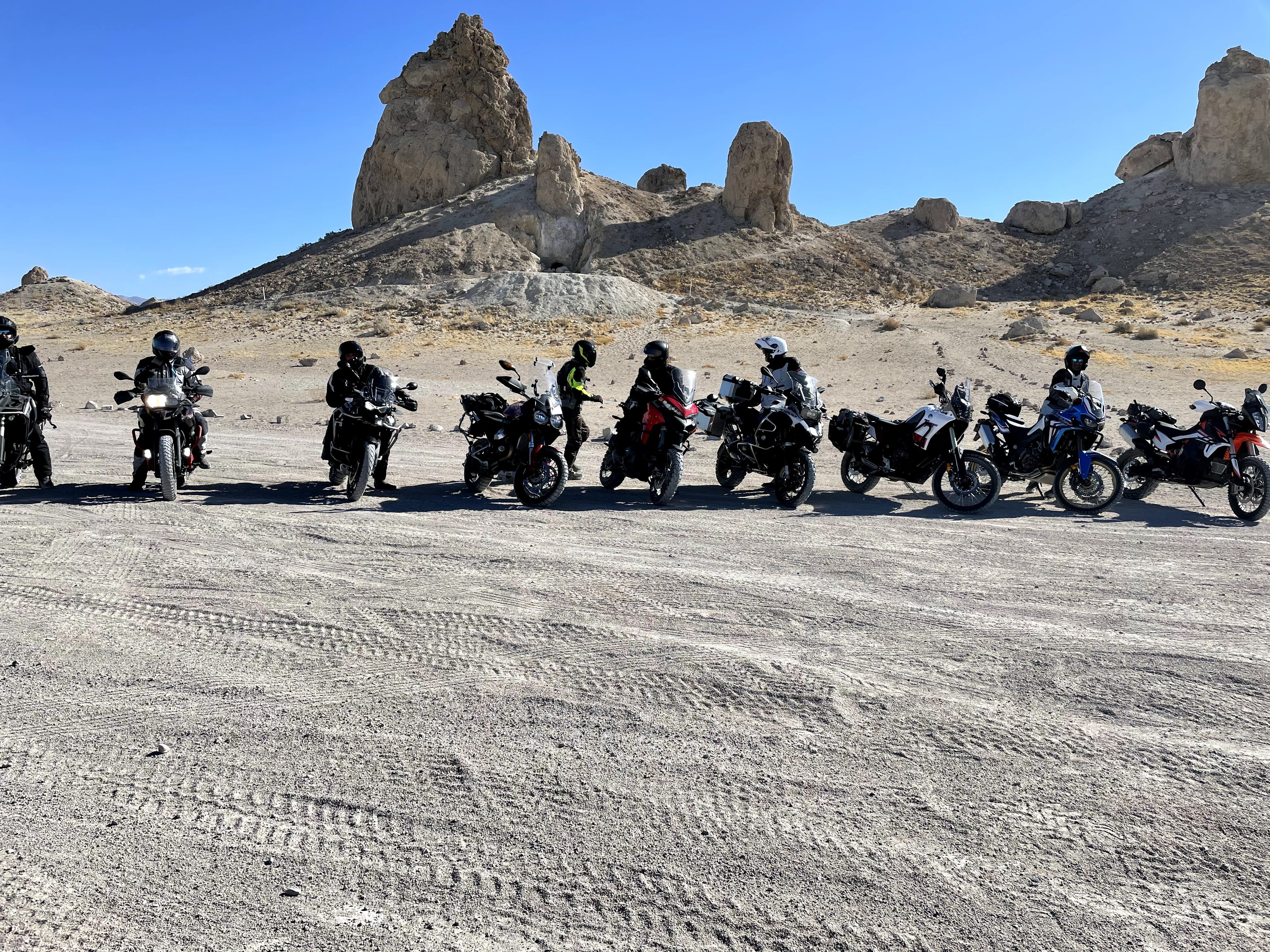
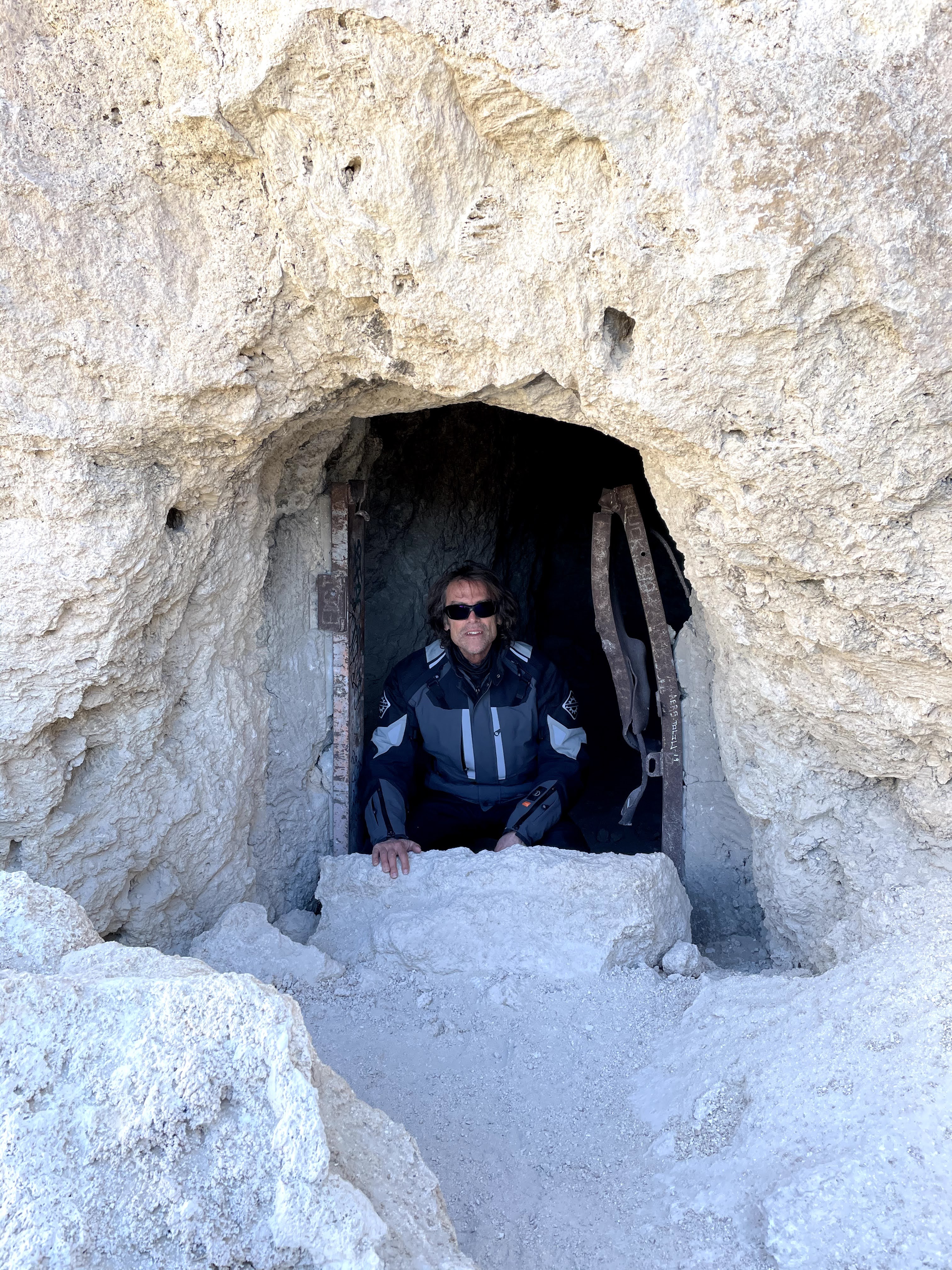
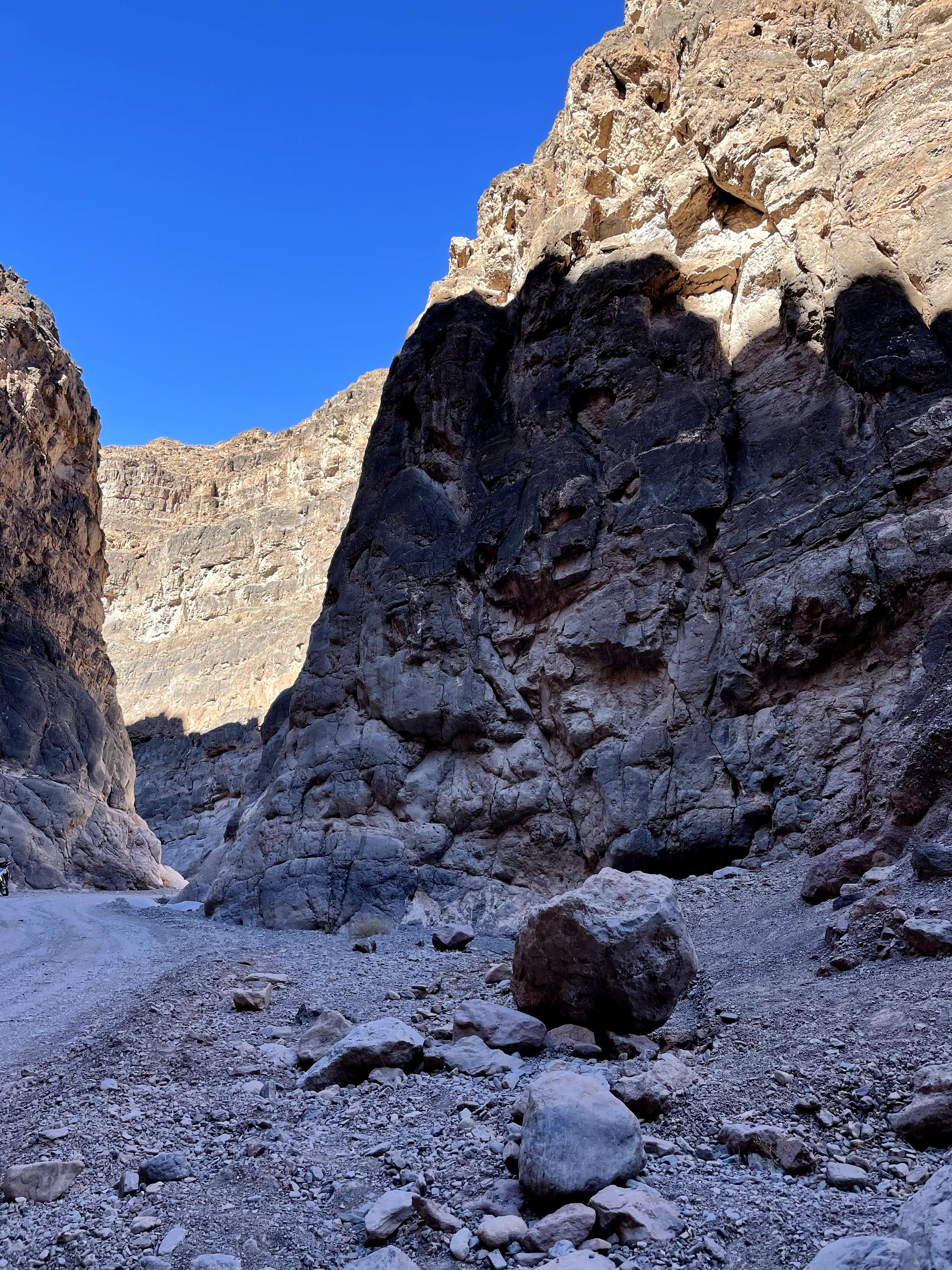
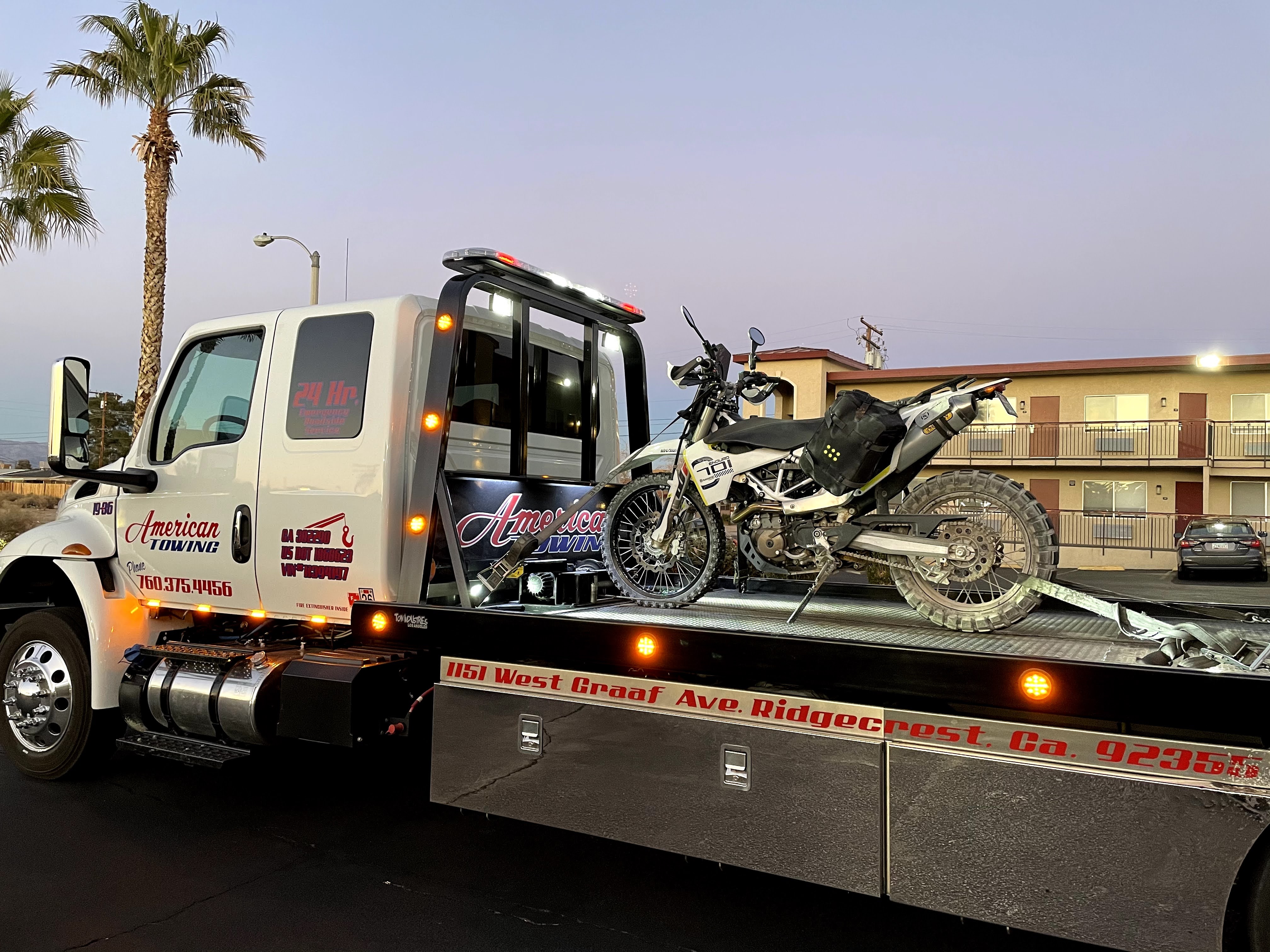
Last week, one of my riding buddies and I headed out to Death Valley for a two day ride with a group we belong to: Sierra Nevada Adventures. On the way down from the Bay Area, he got a flat tire, and we gamely pulled over and attempted to repair it. In doing so, we were caught out by the infamous “pinching the tube” problem, meaning we spent three hours replacing the flat tire with – yes – another flat tire. We then resorted to what we should have done in the first place and had the bike towed to the nearest town where a professional could do the job right. I pushed on at 4:00 am the next morning, while my friend waited for the shop to open, which ultimately caused him to miss the entire first day of the ride.
No matter, this is adventure, right? After reconnecting in the desert town of Beatty, Nevada – we set off on Sunday morning with spirits renewed and ready to make the most of the weekend. However, two hours into what had thus far been a gorgeous tour of the Valley, my friend’s motor decided to call it quits. This time, there were no false illusions of roadside repairs. We limped into a tourist junction, where he had the bike towed (again!) to a town where he could rent a U-Haul and drive it back home. All said and done, he spent a pretty big chunk of change for a pretty small bit of fun.
I tell this story because it offers a lesson in character, or at least in one’s outlook on life. You see, if our roles had been reversed and my bike had had the problems, I would most likely have been boiling over in frustration, cursing the gods at my misfortune. But my friend took it all in stride. His attitude was, “things can always be worse”, and he even managed to smile at the absurdity of the situation.
How to account for such a disparity in perspective? Well, my friend has endured some major challenges in his life. He lost his wife to cancer a few years ago, and he himself is a cancer survivor. These are things he almost never talks about, not because he is in denial. but because he seems to have made a pact with himself not to dwell on the past and instead embrace the present and all the goodness life has to offer. In fact, it was this friend who coined the name of this blog as a reminder to himself how precious life is and how important it is to take advantage of the time that we have. And he does have very good things in his life: two great children, a nice home in the hills, money enough for two-wheel toys, and of course his motorcycle buddies 😉
For me, this star crossed weekend was a reminder that our attitudes are not so much formed by what happens to us but rather by how we choose to react to the adversities that life throws our way. A good lesson indeed.
One of the very first things every motorcycle rider learns is to keep their eyes directed down the road as this gives them time to react to the environment around them. Interestingly, when we humans are nervous or afraid, we tend to direct our gaze to our immediate surroundings. On a bike it’s just a foot or two ahead of the front wheel. This has the effect of making everything seem like it’s coming at you faster, heightening your anxiety, and indeed giving you less time to react to unforeseen circumstances.
When we feel vulnerable or just unhappy in our daily lives, we tend to do the same – focus on what’s right around us. Conversely, when we are at ease, we naturally look outside ourselves, our horizons expand. With this understanding, I think there is a way to use this to our advantage.
Consider this: when we are happy, we smile (of course). But studies have shown that it can also happen in reverse – we can actually induce happiness by manipulating our facial muscles into a smile. The association must be so strong that our brains treat cause and effect as interchangeable.
I have a lot of opportunities to apply this principle on my motorcycle. I’ve become very adept at recognizing when I’m looking down in response to a scary situation; when that happens I force myself to pick up my eyes, and like magic, my stress level ebbs, and I am able to deal with the challenge in a calm manner. Doing this on the motorcycle is good practice for other parts of my life when things aren’t going well or I’m just feeling down. Manipulate my stress response, and its cause can be diluted.
What about looking back, does that play a role? Most certainly. On a bike, it means checking your rearview mirror to ensure that your buddies are still with you. Here, the parallels to life off the bike persist.
If you’ve read any of my other posts, you’ve likely noted that I’m very much about the future and the adventures I hope to experience in my 3rd third. But I got a very good reminder that the past – what’s in the rearview mirror – still matters a lot! For my birthday this week, my daughters made a 30 minute movie of my first two thirds, and it included pictures from throughout my life and messages from my dearest friends and family. One of the clips was from my oldest friend (48 years!) who introduced the metaphor of the literal and figurative rearview mirror. It all served as a timely reminder of how rich my life has already been and how I am very much a product of those experiences and relationships.
Yes, my 3rd third is mostly about keeping my chin up and eyes pointed down the road, but I hope to always remember to keep peeking in the rearview mirror, as life is as much about where we’ve been as it is about where we’re going.
With several posts under my belt now, I feel this journal taking on a rhythm of its own. The posts apparently like being written about once a week.
With my last entry coming only three days ago, I’m a bit out of sorts here, but since today is my actual 60th birthday and I’ve made such a big deal out of the 3rd third timeline, I thought I should at least say something on this auspicious day. Without a specific topic in mind, I took to my favorite idea-generating activity: going for a walk.
While strolling through the Oakland hills on this beautiful afternoon, I found myself asking what emotions I was feeling; did anything in particular stand out? The answer came quickly: gratitude. I’m simply thankful for all of the wonderful things that life has given me to date, and I think it’s important to remind myself how lucky I am. It’s a peculiarity of human nature that we seem incapable of appreciating something until we have to do without it. All other species are wired to know a good deal when they have it; just watch a cat sometime. So let me not do that here, let me proactively, intentionally express my gratitude.
First and foremost, I’ll start with my family who offer and accept the love that makes life truly a blessing. Then, my close friends – especially my motorcycle buddies – with whom I experience boundless fun and adventure. Also my employers and co-workers who over the years have provided me the means to earn a living but also an intellectually stimulating environment where I get to think, debate, imbibe (usually responsibly) and succeed more often than not.
These are my personal relationships, but I also want to express my gratitude for this wonderful place that I live in called the USA. Uncle Sam has taken quite a beating of late, but I know from years of world travel that the United States continues to represent the best of what humans have to offer. In that vein, I thank our fighting men and women, who have provided safety and security for me and my family. And I thank our business leaders whose willingness to take risks has made us the wealthiest nation in history. I thank the countless citizens whom I’ll never meet but who all contribute to this democratic project in their own important ways. And finally, I must thank the Founding Fathers, that remarkable group of individuals who came together at a moment in time and formed the system of government that has benefitted so many, myself included.
As I state these last sentiments, I’m sadly mindful many people are suffering and that it’s nearly impossible to say anything nowadays without one’s words being impregnated with political meaning, irrespective of the speaker’s intent. Such is our state of affairs at the moment; however, I won’t mute myself for the disservice it would do to everyone to whom I am so grateful.
In any challenge you face, any risk you encounter, there comes that moment of truth when you just have to go for it. Point the skis down the hill and hope for the best. But I’ve noticed that many people who are also embarking on their 3rd third are less and less inclined to go for it.
And honestly, it makes them seem old. I can’t always tell if their reticence toward risk is due to their aging or if it’s the other way around: maybe risk-taking (or adventure as I like to call it) is what helps keep you young.
As I suggested in my last post, adventure – going for it – can come in many forms. I’m fortunate to also have a few close friends who indeed exemplify the go for it spirit, and in my next few posts, I’d like to share their stories.
I’ve known friend one since we were in 7th grade. No surprise that at that age, girls were often on our minds (ok, always on our minds). But my friend was unusually shy, especially around girls, and he carried that into adulthood. Eventually though, he fell in love, married, and raised two beautiful children (and is now a grandfather!).
Unfortunately, as happens so often these days, the marriage ended in divorce, and the parting was not completely amicable. Post-divorce, his friends set him up on a few blind dates that didn’t go great, and perhaps understandably, my friend reverted to his former disposition and did not have another date for 7 years. It could have easily continued like that, but one day he bumped into an attractive lady whom he had briefly met on a previous occasion. She reminded him of the meeting, and they struck up a conversation which quickly led to a friendship where they were seeing each other every week.
It began to occur to my friend that maybe the death of his love life was greatly exaggerated. The more time they spent together, the more it seemed their friendship might blossom into something more, and with each passing week his feelings grew stronger. Alas, love is a fickle thing; his lady friend had gone through a bad divorce herself, which in her case seemed to close off her ability to be intimate. A sort of cat and mouse game ensued, leaving my friend feeling confused, frustrated, and ultimately greatly disappointed, for the relationship eventually came to an end.
Easy as it may have been for my friend to call it quits on women for good, his feelings had been rekindled, and he took what was for him the extraordinary step of signing on to a dating app. That may not sound like such a big deal to you, but then you don’t know my friend. This is someone we once kidnapped and locked into the back seat of a car with a girl in an attempt to force the issue. (News flash: teenage boys do stupid things.)
As of this writing, my friend has had dates with a few ladies from the app, and while none has yet developed into an intimate relationship, he is in the game, his skis are pointed down the hill.
How this will turn out is of course uncertain. My friend may end up getting very hurt, but that’s what makes it an adventure. Whatever the outcome, he has inspired me by having the courage to buck a lifelong tendency and go for something that is most definitely worth it. Oh, and he’s 60.
In my last post, I defined adventure as any activity where the outcome is uncertain. I really do mean that quite literally. Learning a new language, joining a social club, reconnecting with an estranged relative, these are all adventures, even though they don’t involve a lot of physical risk.
Of course, some adventures do entail more risk. This past December, my friend Dave and I traveled to Southern California to participate in a 3 day motorcycle school at the aptly named RawHyde Adventures. The school teaches a number of off road motorcycle riding skills, using 600 lb. BMW’s over a variety of terrain, conditions, and obstacles. The basic rule of thumb: if you’re not dropping the bike, you’re not trying hard enough (by that measure, I succeeded handsomely since I had at least 20 drops and a few crashes to boot).
During the course, I reached many moments where I was faced with a simple choice: try the obstacle or don’t; there is no in between option. The most prominent of these (but not, as it turns out the most difficult) was the Wall of Death. The obstacle is actually three separate walls – low, high, and two walls in close succession. The angle of the walls to the ground is about 75 degrees, and my first though upon seeing them was that this was actually a joke designed to scare the bujesus out of the students and give the coordinators a good laugh. No, I was told, we’re going to climb those walls.
I simply couldn’t believe this was possible until I saw it demonstrated; surely the bike would just bounce off the wall sending me over the handlebars followed by a trip to the emergency room. Nope, totally doable as long as you remember two things – carry enough speed get up and over and keep your weight forward. Forgetting either of these would result in the bike going vertical – first up, then down – with me as the landing pad. Again, trip to the emergency room.
This is where the binary choice of go/no go presents itself and where agility kicks in in all its forms. Physically, I had to be capable of performing the moves; mentally, I had to do something that my instincts were telling me to avoid; and emotionally I knew that if I skipped it I’d miss out on the story telling around the campfire that night. So, I pointed the bike at the low wall, built up enough speed, leaned forward, and… no problem. Honestly it was a bit anticlimactic. The high wall was a bit more interesting, but same result. The double wall included an extra element. After the first wall, you must be pointed directly at the second wall, not at an angle. Otherwise bad things will happen. Here’s a clip of the high wall (note the coach reminding me to keep my weight forward:
RawHyde Adventures Wall of Death
Overall, the course was fantastic. I learned a lot, had a ton of fun, and avoided serious injury. Most definitely checked the adventure box.
The theme I aspire to for my 3rd third is Adventure. That’s the word I think of when I consider what makes for a joyful, vs a mundane life. I define adventure as any endeavor where the outcome is uncertain.
Adventures come in many shapes and sizes; the degree of risk is the determining factor. Going to the store might be, strictly speaking, an adventure as I might get in an accident on the way. But in half a century, that has never happened, so I rate store trips pretty low on the adventure scale. At the other end of the scale is motorcycle road racing, which has been one of my passions. I’ve been lucky enough not to be injured on the track, but doing backward summersaults at 80 mph after crashing the bike carries a fair degree of risk. In such situations, time slows down, and my mind becomes an outside observer to what my body is doing. I find myself listening intently for the sound of breaking bones, which thankfully I’ve never heard. If you could see inside my helmet after one of these spills, you’d find the biggest shit-eating grins ever – what a hoot!
In the many cross country motorcycle rides I’ve taken with my friend Pat, there’s almost always a point where I gaze down a seldom-traveled path and utter the words, “I wonder what’s down that road?” (Pat says that phrase will be my epitaph). I believe that sense of wonder – and its close cousin wanderlust, are the fuel that feed my sense of adventure.
Over the course of my 3rd third, I plan to write about many adventures, big and small. I will also talk about what it takes to be in shape for adventure, what training is necessary to enable adventurous activity. A sneak preview: my guiding principle can be summarized in the single word, agility (I seem to like single word summaries). To be adventurous, I must be agile in mind (mental agility), body (physical agility), and spirt (emotional agility). Every adventure includes all three of those qualities in various proportions, and I therefore must actively train and prepare myself in all of them. This suggests a lifestyle that I’ve found to be very rewarding.
Hi, my name is Curt Schacker, and I’m turning 60 in January 2021. All birthdays that end in zeros are notable, but this one in particular feels extra significant because it marks the start of the last third of my life (based on a notional 90 year lifespan according to my friend, Dave).
If the first 30 years of one’s life are about growing up, getting an education, starting a career and perhaps a family; and the second 30 are about settling into your marriage, raising children, and climbing the corporate ladder; what do we do with the last 30?
I think that question is one that many people my age have. After working hard and making a lot of sacrifices (for very good reasons), we want to know: is that all there is? Not to denigrate our accomplishments to this point, but so much of what we’ve done has been for the sake of others. That spark of individuality that all of have has been suppressed with words of “someday, someday”.
I suggest that at 60, someday has arrived. My kids are adults, I’ve most probably reached the top rung of the corporate ladder, I’m in good health, and I’m fortunate to have the means to explore and pursue what comes next.
This is a blog about my journey through the 3rd Third of my life.

















 My 3rd Third